










Spring, in full bloom: Rediscover Delhi with tree-gazing walks | Delhi News
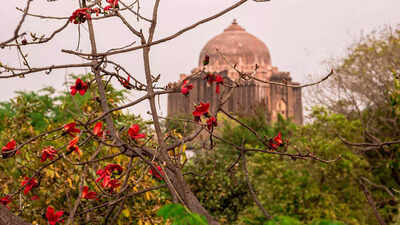
‘In spring, you truly see how trees support the entire ecosystem’
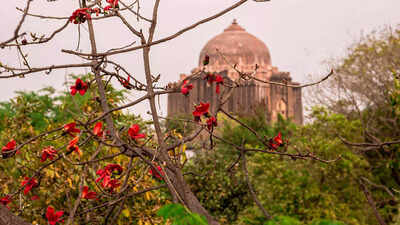
Did you notice the red silk cotton flowers scattered across Lutyens’ Delhi, and pause to look up at the striking crimson canopy of semal trees? If you find yourself slowing down to take in these fleeting moments of nature amid the city’s rush, it might be time to try tree gazing. Take an unhurried walk this weekend – solo, with a buddy, or in a group – through Delhi’s springscape.
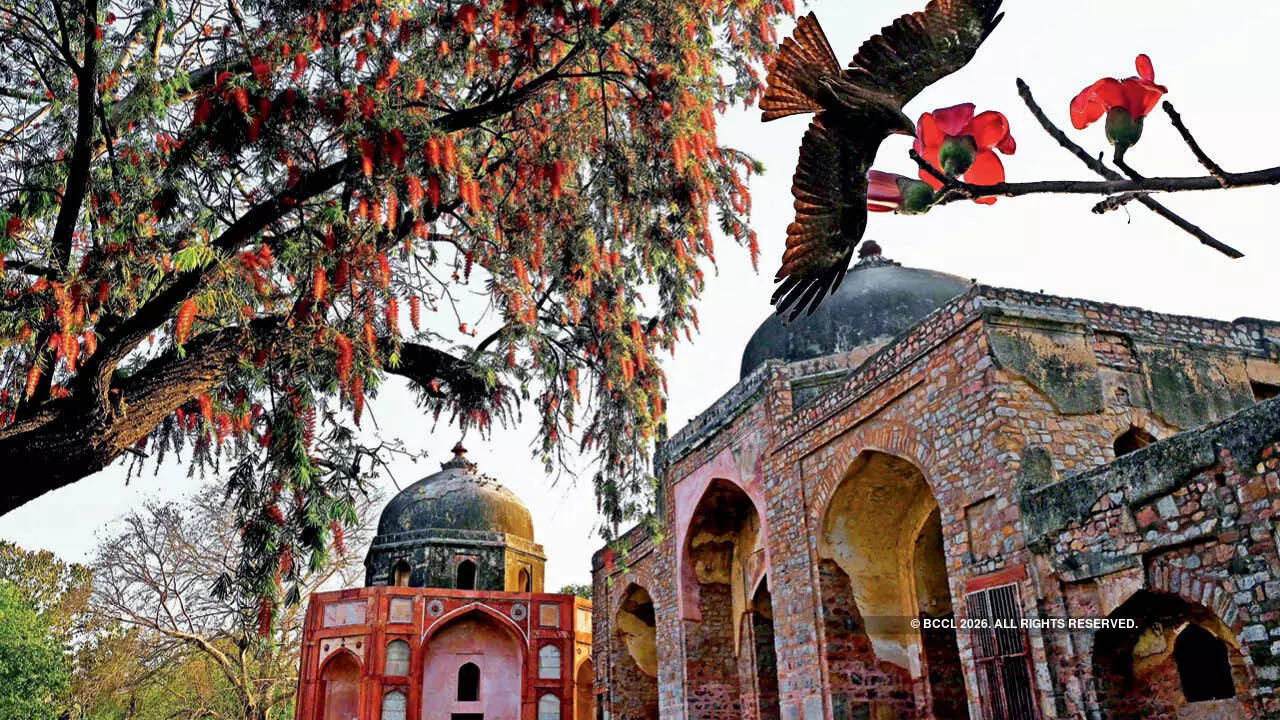
Trees are Delhi’s living heritage
‘We don’t just pass by trees – we stop, observe, and notice their textures’ The trees are Delhi’s living heritage. Verhaen Khanna, founder of New Delhi Nature Society and an environment activist mapping Delhi’s green zones suggests stepping out to observe the floral landscape of the city. He says, “The spring is the most exciting season for tree gazing in Delhi. When we’re on a tree walk, we don’t just pass by – we stop, observe, and really engage with each tree. The best way to understand a tree is to stand under it. I encourage people to interact with the tree, touch the bark, notice textures, and even look at the ground. Often the fallen flowers lead you to a tree in bloom. In spring, many trees announce themselves this way, with their flowers, fragrance and colour drawing you in before you even look up. It’s about slowing down and letting the tree reveal itself, its form, its story, and its place in the city.”
The tree walk at Sanjay Van made me realise how close we are to nature, even in Delhi – from trees and birds to insects, and animals like snakes we often see as problems. In spring, you truly see how trees support the entire ecosystem
Himangi Bhardwaj, who attended a tree walk with author Neha Sinha
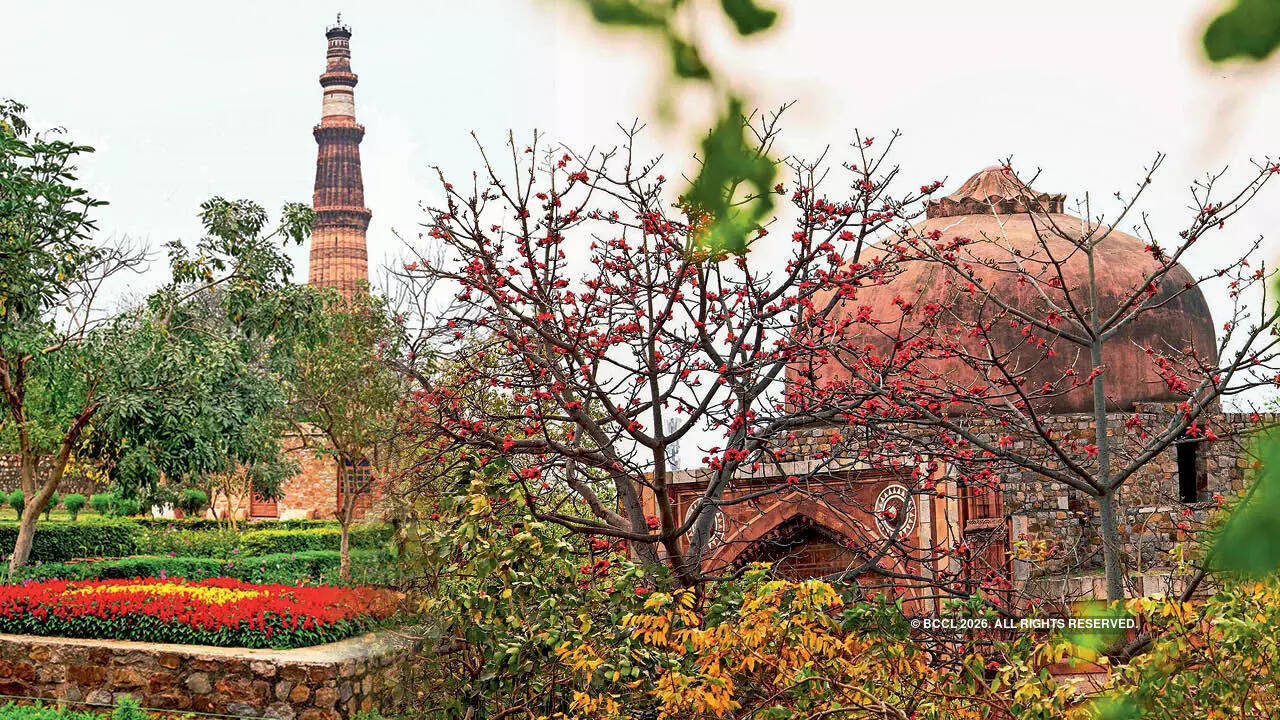
Apart from semal, palash, bakain, jacaranda, bottle brush trees are in full bloom in the city
‘The idea is to connect with nature in deeper, personal ways’On blending poetry with a spring tree walk, moderator Aparna Sanjay says, “At the heart of this poetry and tree walk is the idea of connecting with nature in deeper, more personal ways. Through SeasonWatch’s Tree Festival, we encourage people to engage with their micro-ecology and notice phenology – the seasonal changes and life cycles of trees. The experience begins with a piece of literature that deepens our bond with nature, followed by a walk where we identify trees through their physical traits and uncover folktales behind their names, like the Indian elm, often called ‘chudail papdi’ for the eerie sound of its dry pods. We also focus on native Aravalli species and spotting flowering trees like chamrod, bakain, semal, kanak champa, mango, and bauhinia.”
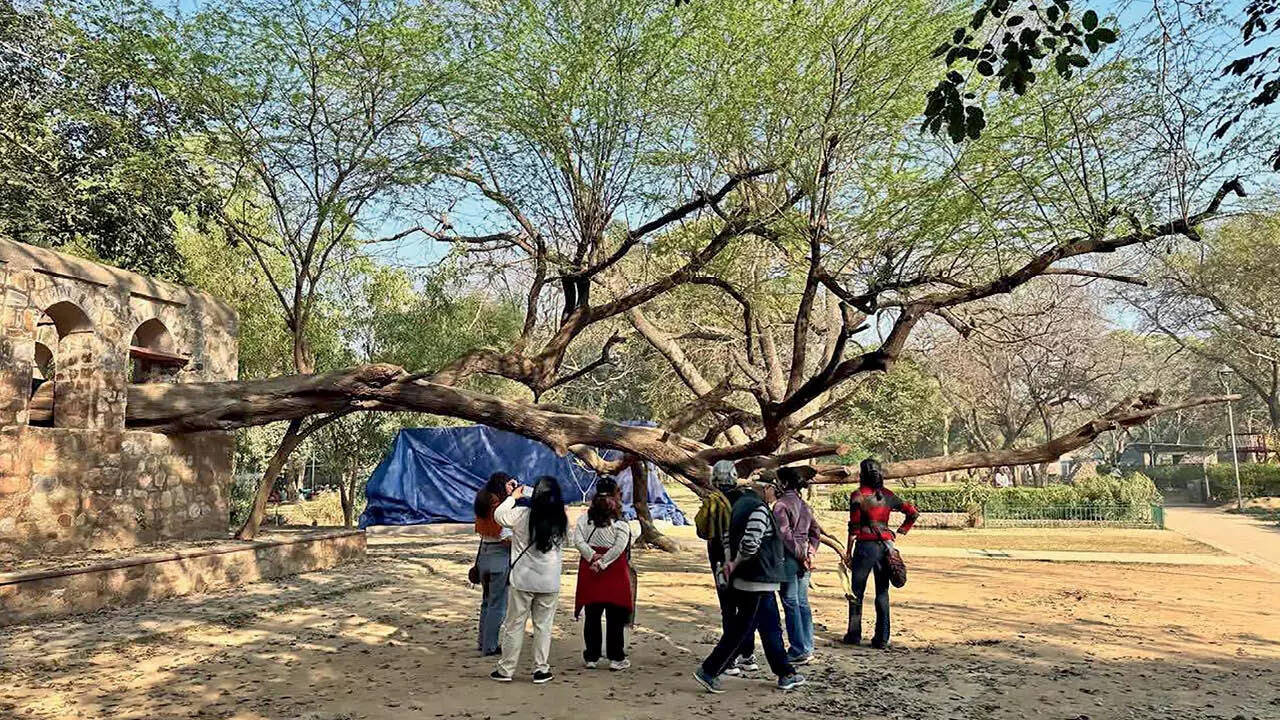
“Sunder Nursery is Delhi’s first arboretum, with an eclectic mix of native and exotic trees – from kusum and tecoma to wild almond, semal and chamrod,” says Kavita Prakash, founder of The Sausage Tree Nature Walks
Kavita Prakash, founder of The Sausage Tree Nature Walks, says, “During a walk, participants are introduced to a handful of earmarked trees, spaced out across the venue. The intent is to spark the participants’ curiosity so that their journey of learning is unique to them.” She adds, “Sunder Nursery is Delhi’s first arboretum, with an eclectic mix of native and exotic trees – from kusum and tecoma to wild almond, semal and chamrod.“
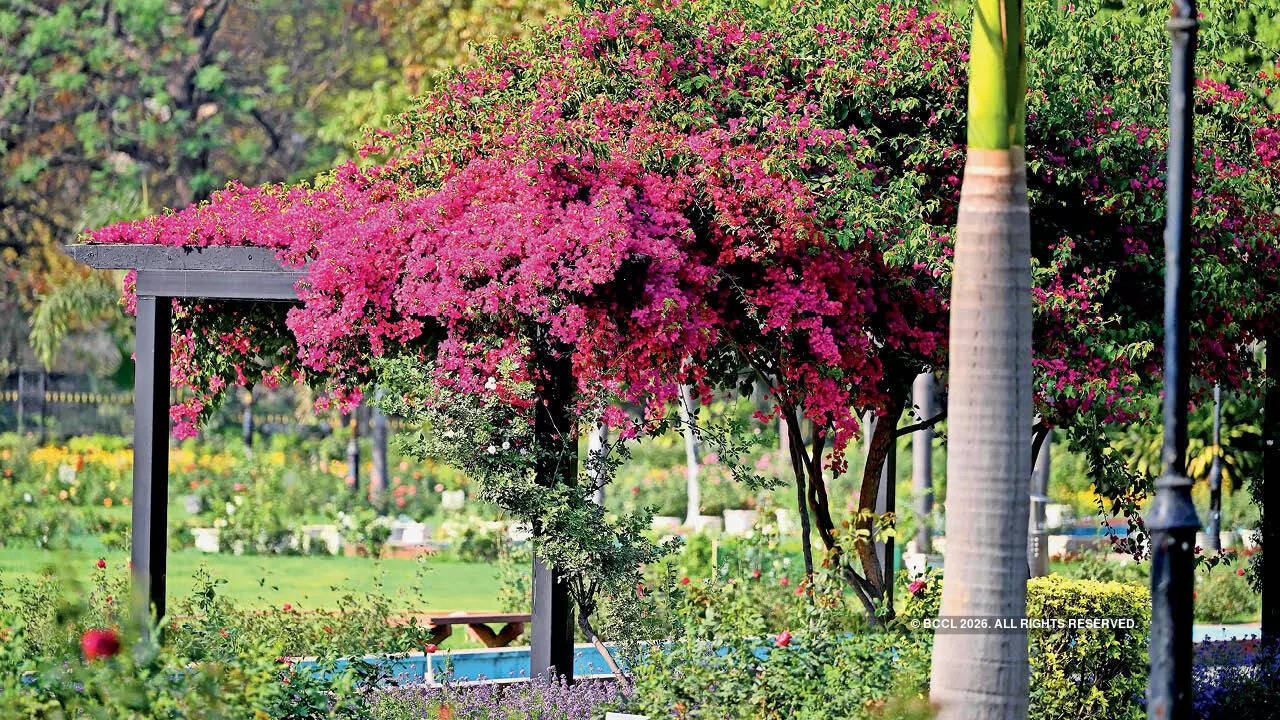
Lodhi Garden
Walk slowly, observe, smell, and even taste, but only if you’re sure about what it is. Today, tools like Google Lens or AI can often help identify tree species, but the real joy lies in engaging your senses
Chandan Tiwari, who documents trees in the city
Delhi’s lesser-known tree hotspotsSuggesting lesser-known tree hotspots, Chandan Tiwari says, “Purana Qila has a mix of native and ornamental trees – you’ll spot kachnar (bauhinia) with its orchid-like spring blooms, and even paras peepal tucked into quieter patches. Shalimar Bagh stands out for its diversity of fruiting trees, while at Roshanara Bagh, look beyond the obvious species like bistendu (Bombay ebony). Swarna Jayanti Park is a treasure trove for seasonal fruiting – mulberries are abundant. Talkatora Garden and Safdarjung Tomb Gardens are great for spotting a mix of avenue and heritage trees.”
The city seems painted red with semal trees in bloom. Look up from your phone and you’ll begin to notice differences in leaf shapes, flowers, bark, and canopy – that’s when the city’s trees start to reveal themselves
Verhaen Khanna, founder of New Delhi Nature Society, which hosts nature walks, tree climbing experiences