





‘Gestational diabetes turns into Type 2 in 50% of women’ | Ahmedabad News
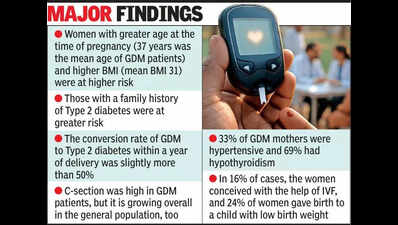
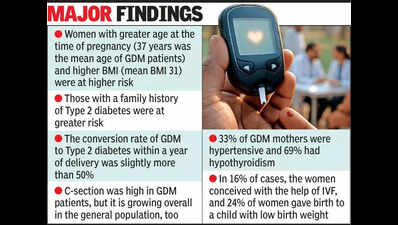
Ahmedabad: Gestational diabetes, a condition in which pregnant women experience a rise in blood sugar levels, has a relatively higher prevalence in India at about 22% compared with a global average of about 15%, according to some reports. The condition, however, is not temporary for many women, as they become prone to developing diabetes mellitus, or Type 2 diabetes.A study based in Ahmedabad city encompassed 247 women with known gestational diabetes, who were tracked for three years continuously from 2023 to 2026 to understand whether the women developed Type 2 diabetes. The results indicated that about 50% of these women still had elevated blood sugar levels three years after childbirth.The study was led by diabetologist Rutul Gokalani and IIPH Gandhinagar associate professor Komal Shah, along with Kashvy Morakhia and Aakansha Shukla. Experts said that gestational diabetes occurs as the placenta produces hormones such as oestrogen, cortisol and lactogen to help the foetus grow, but it also causes insulin resistance that results in a blood sugar spike. Some of the signs include increased thirst, blurred vision, and the need for frequent urination.Dr Gokalani said that about 60% of the women required insulin and metformin for optimal control. “Gestational diabetes (GDM) doesn’t always end with delivery. For many women, it marks the beginning of lifelong metabolic risk. Pregnancy can reveal a hidden diabetes risk: about 50% of women with GDM progressed to Type 2 diabetes during follow-up,” he said.He added that high C-section deliveries among GDM mothers highlight the need for attention to gestational diabetes and obstetric outcomes.Major findings of the study indicated that low-birth-weight babies were more frequent in GDM pregnancies, contrary to common belief. Moreover, most GDM cases occurred in first pregnancies (about 60%), and about one-third of women had a family history of diabetes, suggesting strong genetic susceptibility. Dr Shah said that the results are in line with previously reported findings for gestational diabetes mellitus (GDM) and its progression to post-partum diabetes.“The key emphasis of the present results is on post-partum surveillance of women with a history of GDM. Therefore, early identification of high-risk women during pregnancy and structured post-partum follow-up may help in timely detection and intervention, potentially preventing or delaying the development of Type 2 diabetes,” she said.