






Gadchiroli Villagers Impose ₹20,000 Fine On Booze Sellers, ₹1,000 On Wife Beaters, Fines Collected To Fund Village Development | Nagpur News
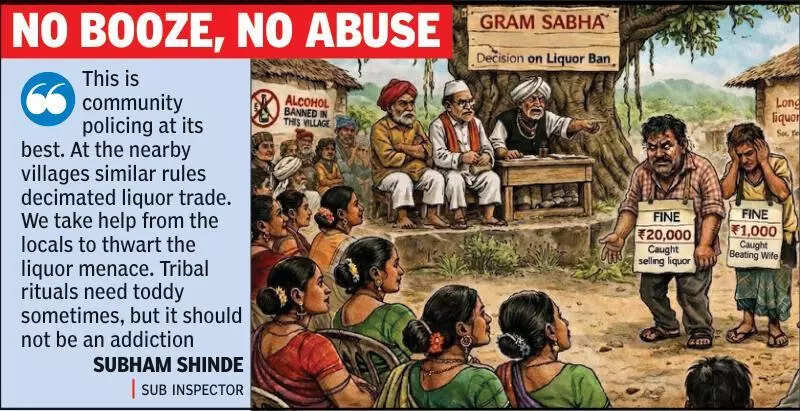
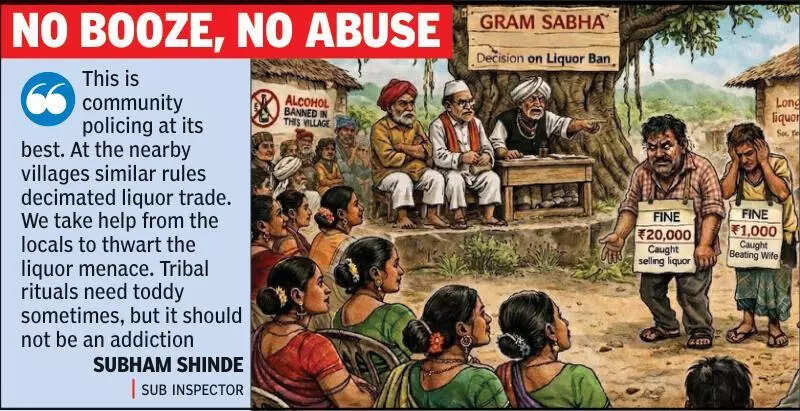
Nagpur: Bamanpalli, a quiet hamlet of 1,700 tribals nestled on the Maharashtra-Chhattisgarh border has drawn a firm line on liquor. The villagers have decided to slap fines for liquor trading to wife-beating and the corpus created from penalties will be ploughed into development work.The village in Bhamragarh taluka, 4km off the former Maoist headquarters of Abujmarh, had been witnessing a turmoil due to tipsy brawls, domestic violence and financial hardships that affected children’s education and health and this forced the liquor ban. Till about a year ago, the village lived in the shadow of fear with guerrilla threats, ambushes and frequent forays by security forces. Today, it faces a new enemy in alcohol.On Sunday, the gram sabha — every adult villager gathered — voted to declare Bamanpalli a liquor-free zone. A village-level committee was set up for implementing and enforcing the rule.The prohibition rule states that anyone caught selling liquor will have to pay a Rs 20,000 fine and those beating wives or creating a ruckus under the influence of liquor will have to cough up Rs 1,000. And those who support or shield bootleggers would have to pay Rs 2,000. But anyone who tips off the village committee on liquor sale would get a Rs 5,000 reward. The money from fines will be used for school repair, hospital needs, road fixes and village beautification.Sadashiv Nilam, a local farmer, says the shift was long overdue. “Liquor was wrecking our lives. Breadwinners are wasting their savings on booze. Fights are breaking out at night, families are falling apart, savings are getting drained and trust is the biggest casualty. The liquor ban is our way to hold the village together.”Sources stated farm owners are compelled to brew liquor to keep the labourers happy, apart from paying daily wage. “Taking advantage of the tradition of offering liquor to labourers, some crooks began brewing in large quantities and selling it to villagers,” said the source.The prohibition move wasn’t sudden. For six months, police from Manne Rajanam station and an NGO ran quiet campaigns with street talks, women’s meetings and youth rallies.Sub-Inspector Subham Shinde, who heads the outpost at Manne Rajaram, calls it “community policing at its best.” He points to nearby Manne Rajanam village, where similar rules decimated liquor trade. “We had to take help from the community to thwart the liquor menace,” he said, adding security forces have wiped out the Maoists and development is the need of the hour. “We’re not banning tradition. Tribal rituals need toddy sometimes. But it cannot be a life-threatening addiction,” he said.